Google Business Profile Tips for Better Local Leads
Use these Google Business Profile tips to improve local visibility, earn more reviews, and turn Maps searches into real leads. Get the checklist.
Read moreA fixed price leaves money on the table on busy days and scares customers off on quiet ones. Here is how demand based pricing works, kept fair and explainable.
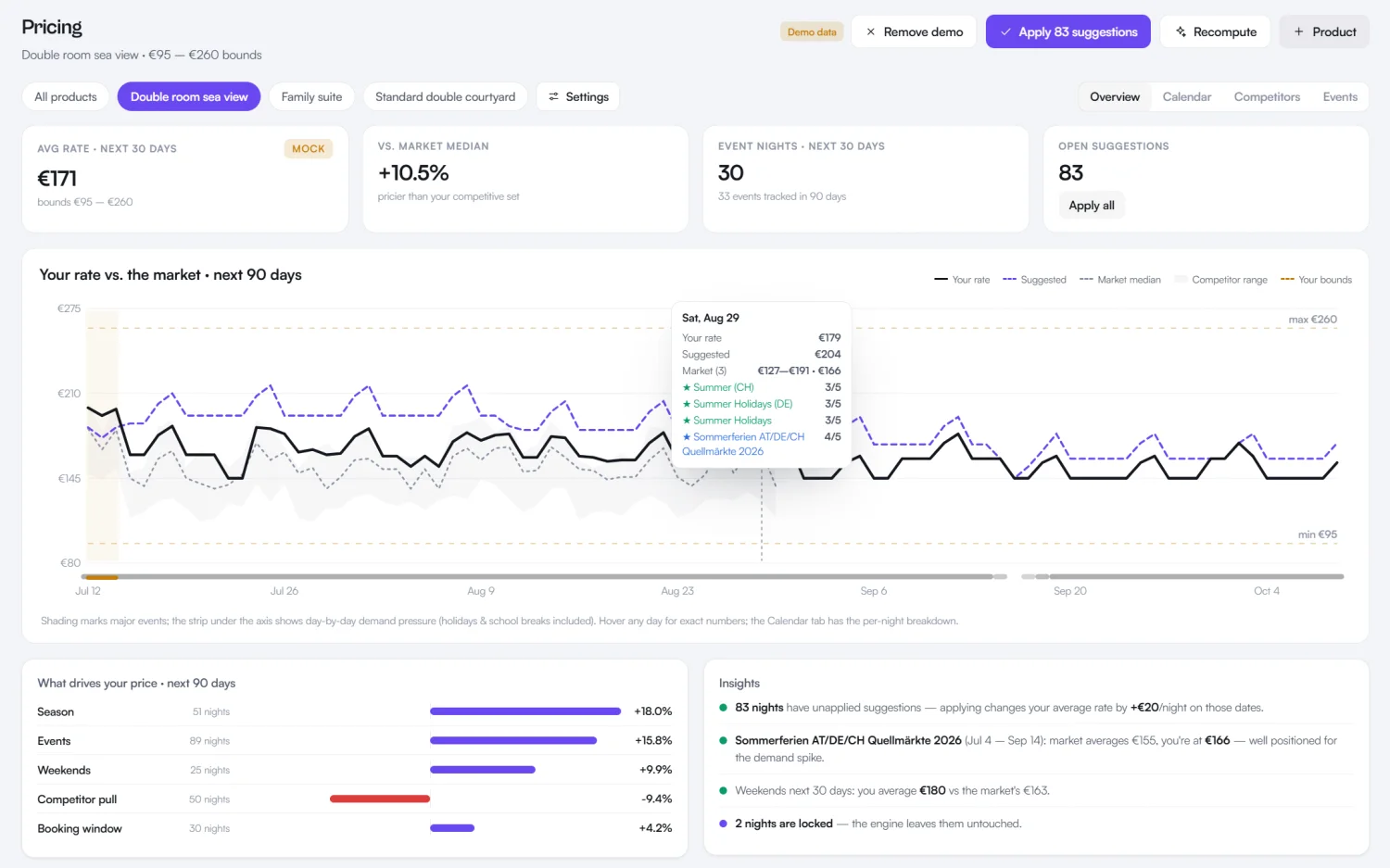
Most small businesses set a price once and leave it there for a year. It feels safe. It is also the quiet reason so much revenue slips away. A single fixed price is too high on a slow Tuesday and far too low on a fully booked Saturday. Dynamic pricing fixes both ends of that problem, and done right it stays fair and easy to explain.
Dynamic pricing simply means your price responds to demand. When a weekend, a holiday or a local event pushes demand up, the price nudges up with it. When things are quiet, a gentler price fills seats and rooms that would otherwise sit empty. Airlines and big hotels have priced this way for decades. What changed is that the same approach is now within reach for a single restaurant, salon or guesthouse.
Good pricing is not a random number generator. It reads a handful of real signals:
The fear with dynamic pricing is that it feels like a trick played on customers. It does not have to. The rule is simple: every price should be explainable. If you can say in one sentence why a Saturday in July costs more than a Wednesday in November, customers accept it, because it matches what they already expect. Pricing becomes a problem only when it is a black box, even to you.
This is the standard the Nordly pricing engine is built to. It weighs demand, season, local events and the market, then suggests a price and shows the reasons behind it, inside limits you set. You stay in charge. You can see exactly why a number moved, and you can always override it. No black box, no surprises for you or your guests.
Keep reading
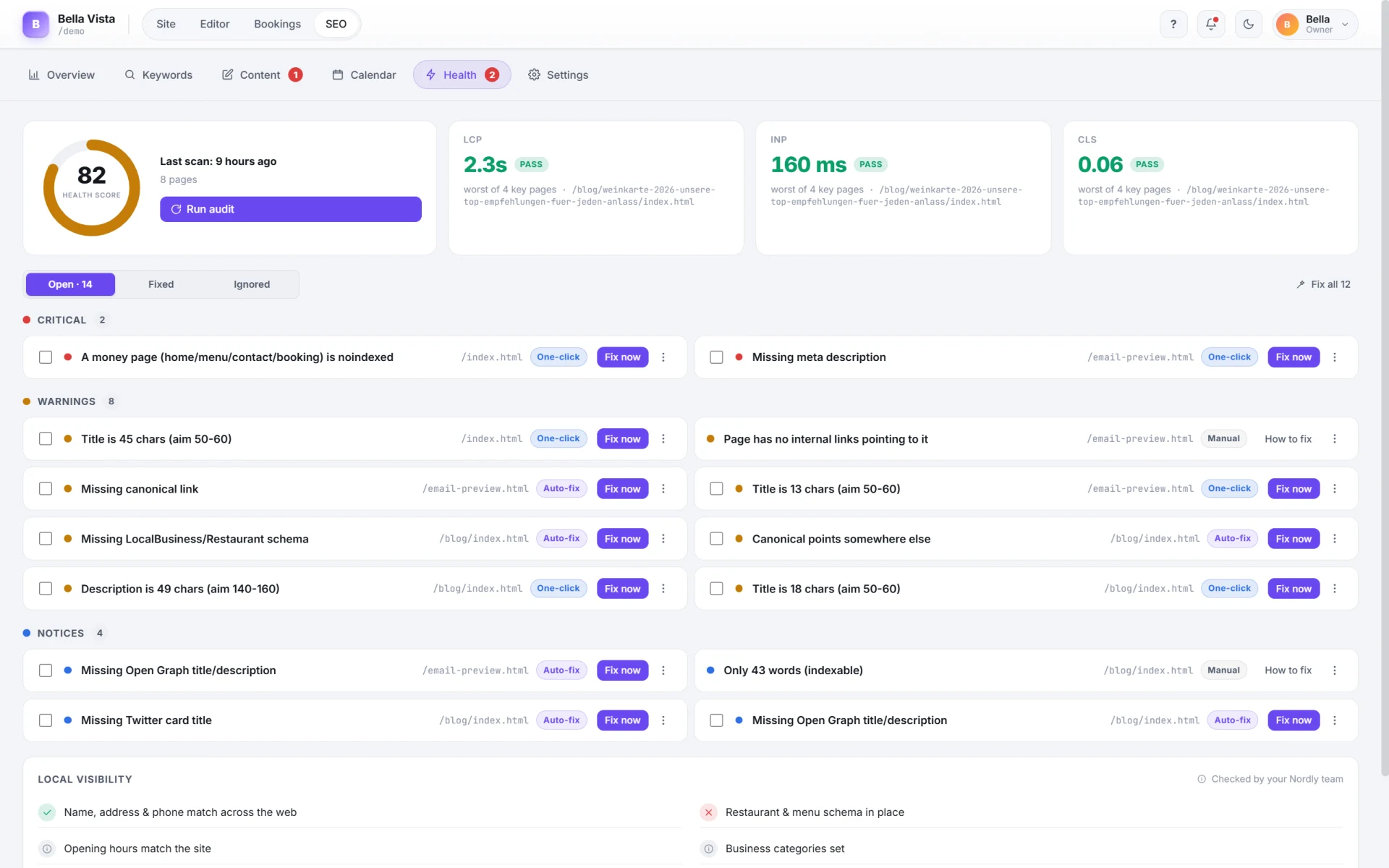
Use these Google Business Profile tips to improve local visibility, earn more reviews, and turn Maps searches into real leads. Get the checklist.
Read more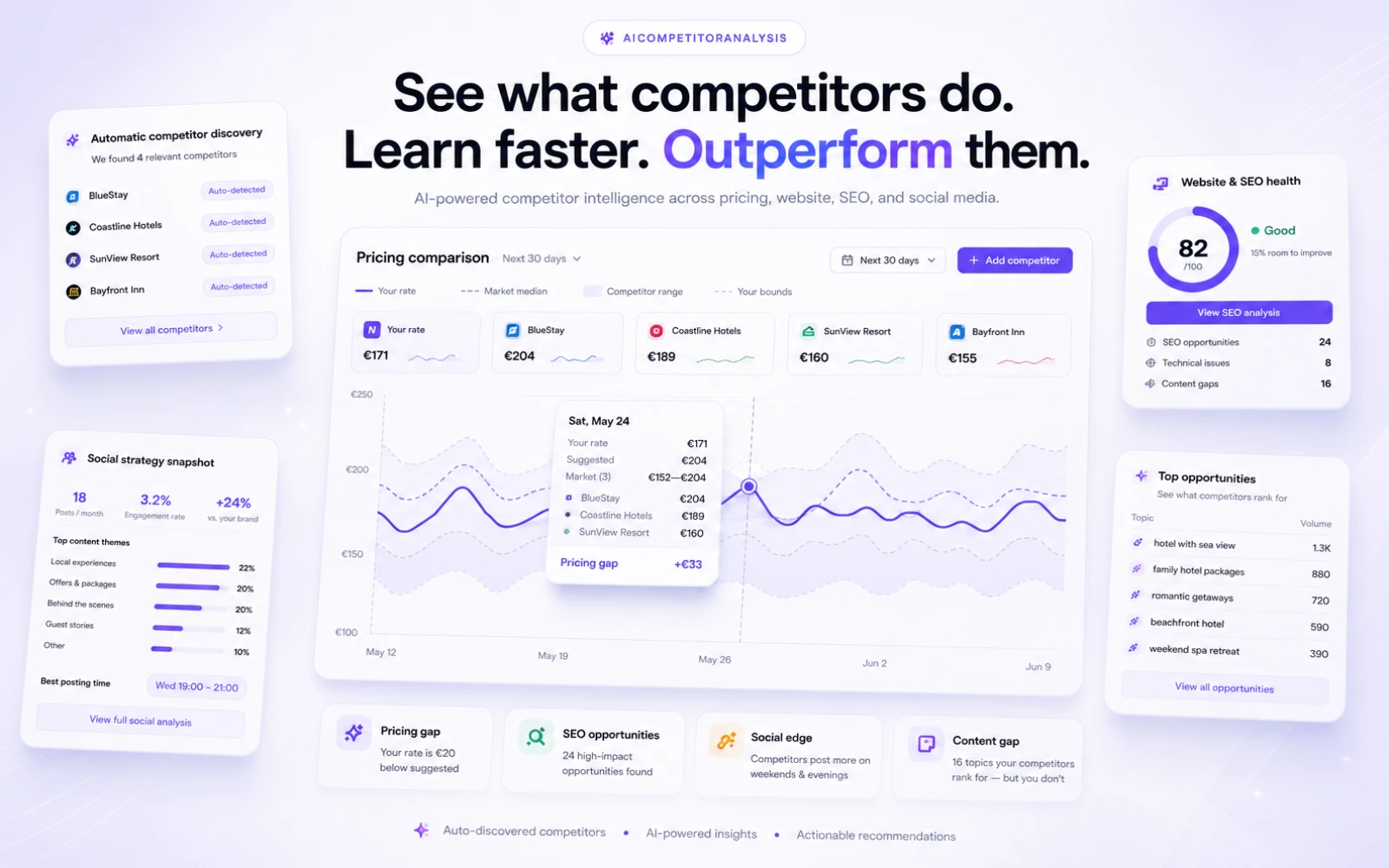
Your rivals leave a trail every day: their prices, their new pages, their posts. Here is how to read that trail and turn it into moves you can make first.
Read moreA short conversation is enough to find out whether we are a fit. No strings, no jargon, no pressure.
Send an enquiry