How to watch your competitors online (and win locally)
Your rivals leave a trail every day: their prices, their new pages, their posts. Here is how to read that trail and turn it into moves you can make first.
Read moreUse these Google Business Profile tips to improve local visibility, earn more reviews, and turn Maps searches into real leads. Get the checklist.
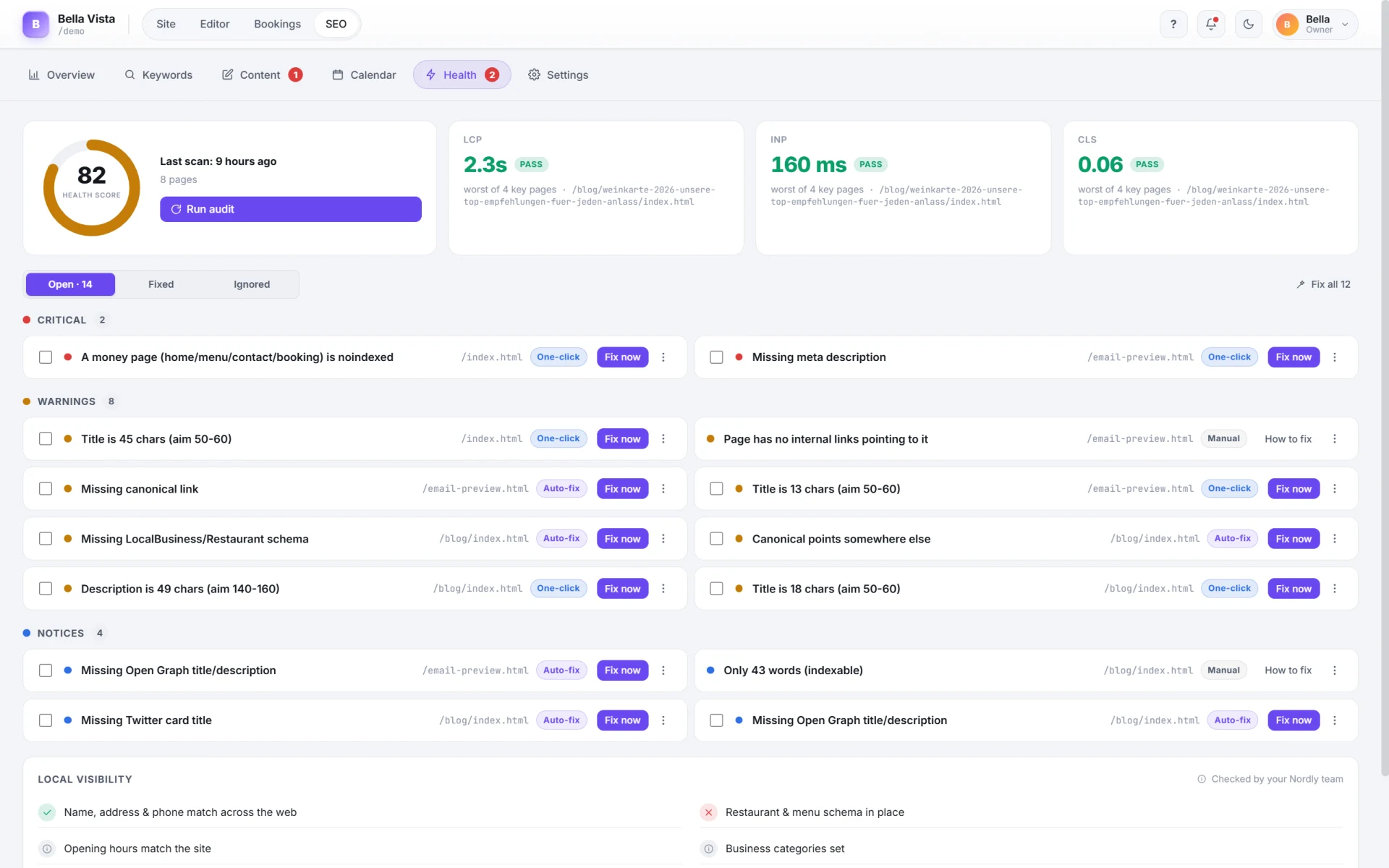
Google Business Profile tips matter because your profile often answers the customer's question before your website gets a click. To improve results, do these in order:
Most local businesses set up a Google Business Profile once, then leave it untouched for years. That is the mistake. Your profile is not a digital business card. It is a living local search asset that helps Google understand who you serve, where you work, and why searchers should trust you.
At Nordly Digital, we see the same pattern across DACH and Northern Europe. The businesses that treat the profile as part of their sales system usually get more calls, more route requests, and better local visibility. The businesses that treat it as admin work often disappear behind competitors with weaker websites but stronger local signals.
The best Google Business Profile tips start with accuracy. Google wants to show searchers a useful, trustworthy local result. If your category, address, hours, or service list is vague, Google has less confidence in your business.
Your primary category is one of the strongest relevance signals in local search. A dentist should not choose a broad health category if a specific dental category exists. A web design studio should not hide behind a generic marketing category if its main revenue comes from web design.
Check the categories used by the top three competitors in Google Maps for your most valuable search terms. You can document this manually, or build it into a simple competitor review process like the one in watch your competitors online.
Your name, address, phone number, website, and opening hours should match your website and major directories. Small differences are not always fatal, but consistency reduces doubt for both users and search systems.
If you operate across several towns, do not stuff locations into the business name. Use service areas, landing pages, and content to explain coverage. For a broader local search framework, see our local SEO playbook.
Google has reported that people are more likely to consider a business reputable when its profile is complete. The practical takeaway is simple: empty fields cost trust. Add services, products, appointment links, photos, accessibility details, and real opening hours.
You can review Google's own guidance in the Google Business Profile Help Center. It explains how businesses can manage profile details, verification, and updates directly inside Google.
Key insight: A complete profile does not guarantee top ranking, but an incomplete profile gives better organised competitors an easy advantage.
A Google Business Profile affects Google Maps ranking through three broad signals: relevance, distance, and prominence. Relevance is how well your business matches the search. Distance is how close you are to the searcher or searched location. Prominence is how well known and trusted your business appears to be.
Relevance starts with categories, services, descriptions, photos, and website content. If someone searches for emergency plumber in Zürich, Google needs enough evidence that your business provides that service in that area.
This is where your website and profile should work together. A thin profile linked to a thin website creates weak evidence. A detailed profile linked to focused service pages creates a clearer local entity. If your website is not converting profile visitors, read why most websites do not win clients.
You cannot optimise your way around physical distance completely. A business in Hamburg will struggle to rank in Munich for generic local searches. But you can improve coverage in realistic nearby areas by using correct service areas, local landing pages, and customer proof from those towns.
For service businesses, avoid creating fake offices. They create compliance risk and often lead to suspensions. A clean profile with real service areas is safer and easier to maintain.
Prominence comes from reviews, links, mentions, photos, user engagement, and broader brand recognition. This is why a Google Business Profile should sit inside a wider local SEO system, not apart from it.
Google explains local ranking factors at a high level in its guide to improving local ranking on Google. The important point is that no single trick replaces consistent proof.
The Google Business Profile tips below help customers choose you before they compare five other tabs. They are practical, repeatable, and useful for trades, clinics, restaurants, professional services, and local B2B providers.
Your business description should explain what you do, who you help, and where you work. Do not waste the first line on a slogan. Use plain words a customer would recognise.
For example, a better description is: We build fast WordPress websites and local SEO systems for clinics, trades, and service businesses in Hamburg, Copenhagen, and the DACH region. That sentence gives services, audience, geography, and positioning.
Many businesses add one broad service and stop. That leaves money on the table. Add the services people actually search for, then write short descriptions that explain outcomes and boundaries.
Photos are not decoration. They reduce uncertainty. Add images of your team, workspace, vehicles, finished work, equipment, packaging, menus, treatment rooms, or before and after examples where appropriate.
A service business should upload new photos at least monthly. A restaurant, showroom, or venue may need updates more often because customers rely heavily on visual proof.
Google Posts can support launches, seasonal offers, events, hiring, case studies, and service reminders. They usually do not replace website content, but they give searchers fresh signals when they view your profile.
Keep posts short and specific. Link them to a relevant page, not always the homepage. If you need a stronger content engine behind the profile, Nordly Digital's content service can turn recurring customer questions into useful search assets.
The Google Business Profile tips that create calls are the ones that reduce friction. A customer looking on mobile wants fast confirmation that you solve their problem, operate nearby, have good reviews, and are easy to contact.
Your phone number, website link, booking link, and messaging settings should be current. If you use call tracking, configure it carefully so your public number remains consistent where it matters.
Do not send every click to the homepage. If the profile category is emergency electrician, send visitors to a relevant emergency electrician page. If the profile highlights web design, link to the matching service page at Nordly Digital web design or your own equivalent page.
The questions and answers area is often ignored, which makes it useful. Add common questions from customers and answer them clearly. Focus on pricing structure, service radius, response times, warranties, parking, payment methods, languages, and booking requirements.
These answers can reduce low quality calls and increase confidence from ready to buy customers.
A strong profile can send traffic, but your website still has to convert it. The page should load quickly, match the service promised in the profile, show proof, and make contact simple.
If your site looks fine but does not generate enquiries, the issue may be positioning, page structure, or weak calls to action. That is where conversion focused design and SEO strategy need to work together.
Google Business Profile tips are incomplete without a review system. Google reviews influence trust, click behaviour, and customer decisions. They also give Google more language around your services, locations, and customer experience.
The best time to ask is shortly after a successful outcome. For a trade business, ask after the customer signs off the work. For a clinic, ask after a positive appointment. For a B2B service, ask when a milestone has delivered a clear result.
Make the request short. Do not pressure people, do not offer rewards for positive ratings, and do not script the exact review. The FTC guidance on online reviews is a useful reference for staying transparent and fair.
A reliable workflow beats random reminders. Add the review request to your normal delivery process, automate the timing where possible, and assign one person to monitor responses.
For busy teams, automation can remove the awkwardness and inconsistency. Nordly Digital's automation service helps local businesses connect forms, CRM steps, email follow ups, and review requests.
Generic replies waste an opportunity. Mention the service, location, or result when it feels natural. A reply such as, Thank you for trusting us with your bathroom renovation in Graz, gives more context than, Thanks for your feedback.
Handle negative reviews calmly. A good response should acknowledge the issue, explain the next step, and move sensitive details offline. Future customers judge the reply as much as the complaint.
Many owners check their Google Business Profile only when they need to change holiday hours. That is too late. Treat it like a sales channel with inputs, outputs, and a monthly review rhythm.
Profile performance data can show calls, website clicks, messages, booking actions, direction requests, search terms, and photo views. These numbers are not perfect, but they are useful enough to spot movement.
Once a month, search your main service plus location in an incognito browser and inside Google Maps. Record the top three profiles. Note categories, review count, rating, photo freshness, services, posts, and website quality.
This is not about copying competitors. It is about finding gaps. If every top competitor has two hundred reviews and you have twelve, your priority is obvious. If they all use stronger service pages, your website needs work.
A Google Business Profile does not need hours every week. It needs consistency. A focused 30 minute routine can prevent decay and help you find small gains before competitors do.
If you want help turning this into a practical local growth system, contact Nordly Digital through our contact page. We work with local businesses that need clear execution, not another vague marketing report.
The most important Google Business Profile tips are to verify the listing, choose the correct primary category, complete every field, add real photos, collect Google reviews, and keep details current. These basics improve relevance and trust. Advanced tactics rarely help if the profile has wrong hours, thin service information, or no review process.
You should update your Google Business Profile at least monthly, and immediately when hours, services, phone numbers, or locations change. A simple monthly routine is enough for many service businesses. Restaurants, venues, shops, and seasonal businesses may need weekly updates because customers rely on fresh photos, offers, and opening details.
Yes, Google reviews can support Google Maps ranking because they contribute to prominence and user trust. Review quantity, quality, recency, and response patterns all matter. Reviews are not the only factor, but a business with steady, authentic feedback often earns more clicks and calls than a similar business with weak or outdated reviews.
Yes, you can sometimes gain visibility in nearby cities without an office there, but expectations must be realistic. Use service areas, strong location pages, customer proof, and relevant content. Do not create fake offices or keyword stuffed business names. Those shortcuts can lead to profile suspension and long term trust problems.
Your Google Business Profile may not get leads because the category is wrong, the profile is incomplete, reviews are weak, photos look poor, or the linked website fails to convert. Start with the basics, then compare your profile against top local competitors. The gap usually becomes clear within one focused review.
Keep reading
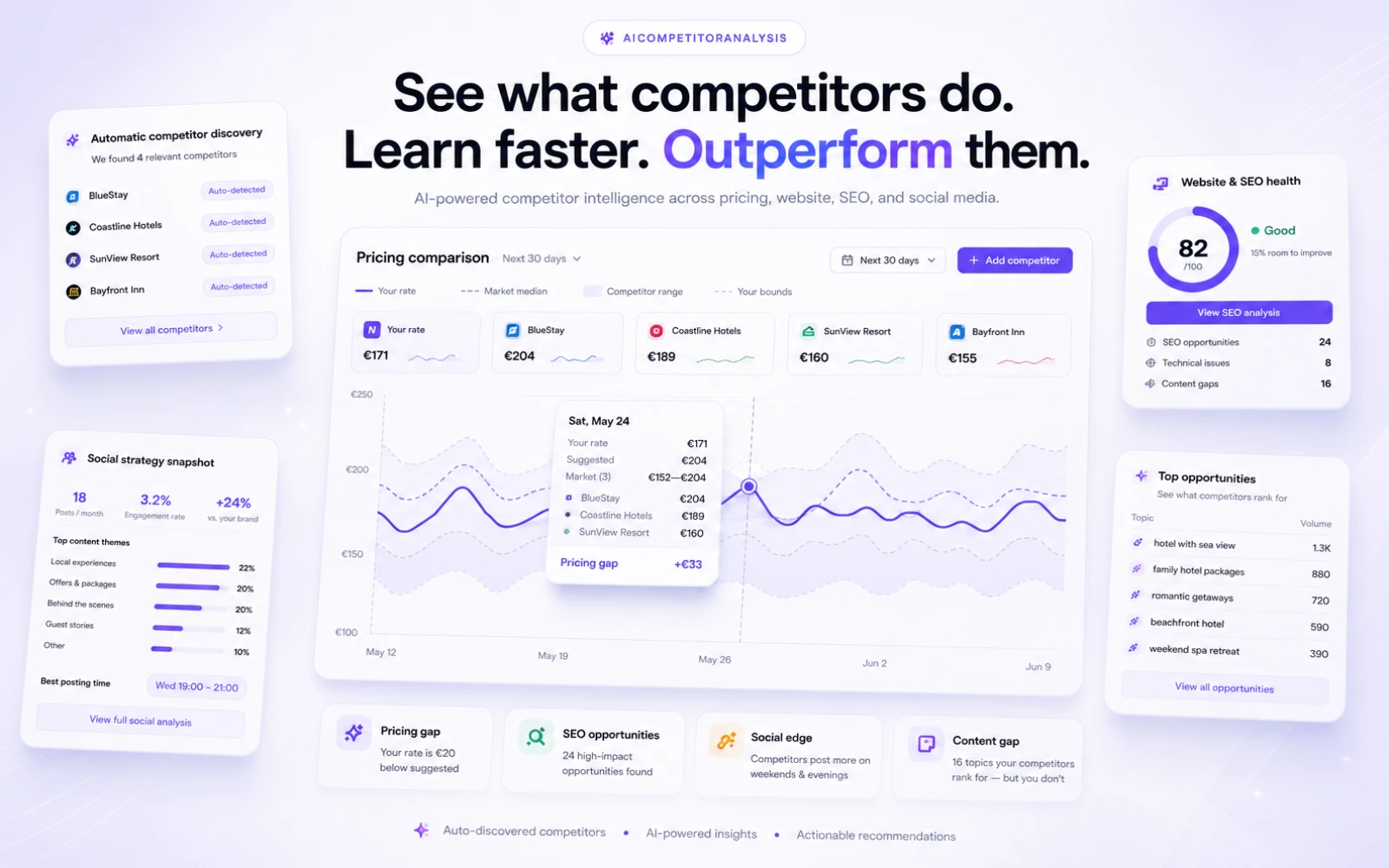
Your rivals leave a trail every day: their prices, their new pages, their posts. Here is how to read that trail and turn it into moves you can make first.
Read more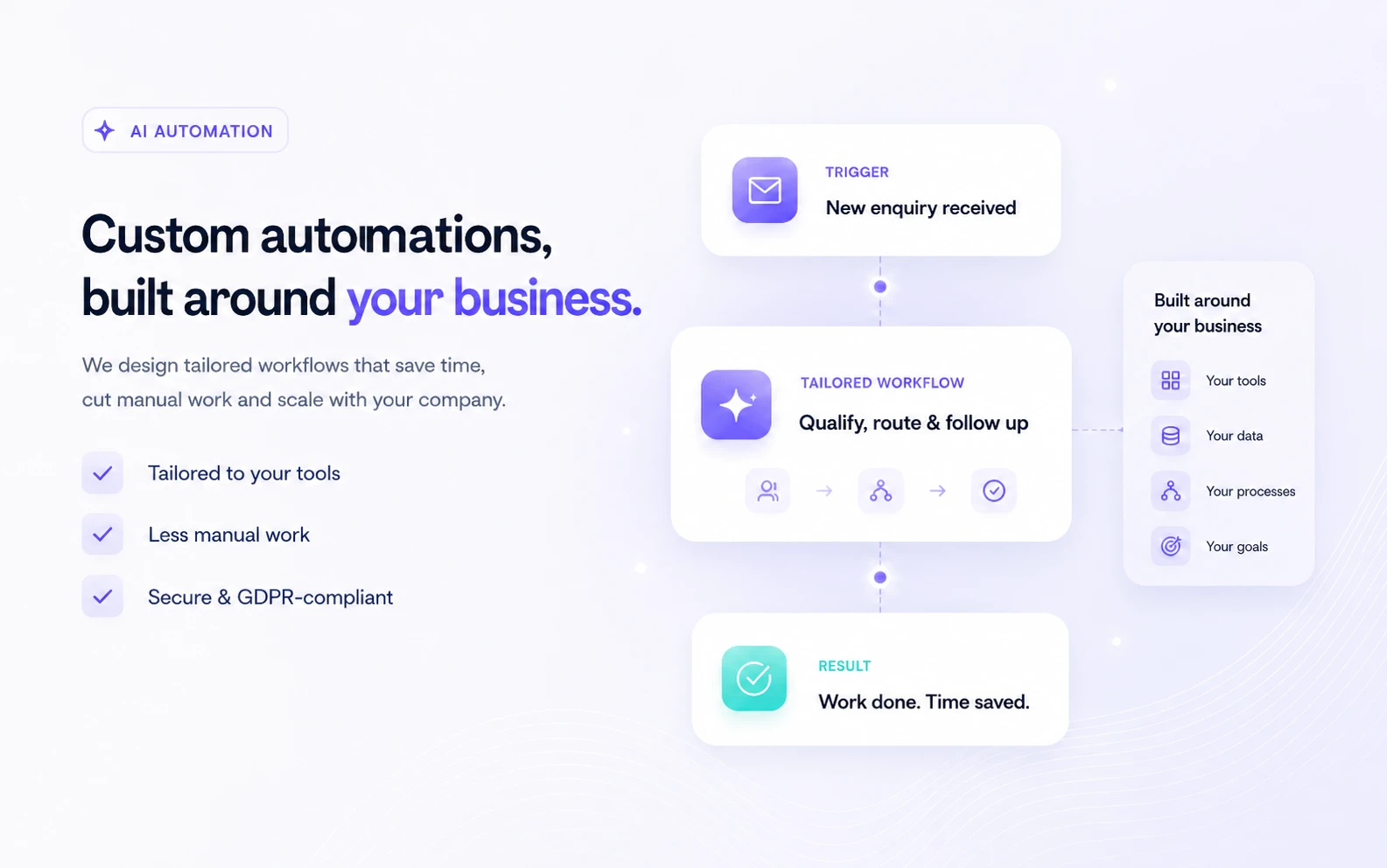
Automation is not about replacing people. It is about deleting the repetitive admin between a new enquiry and a booked job, so your team spends its hours where they count.
Read moreA short conversation is enough to find out whether we are a fit. No strings, no jargon, no pressure.
Send an enquiry